
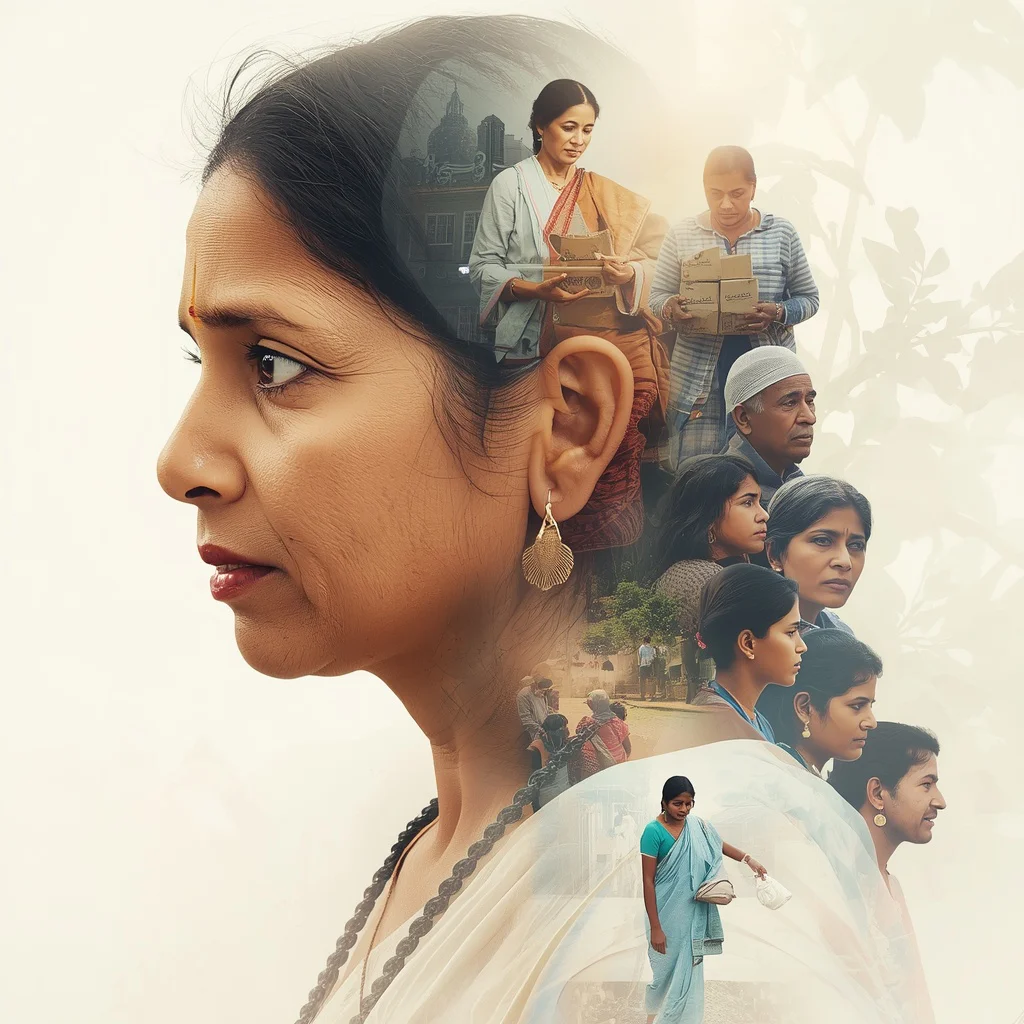
A Lifetime of Service: An Indian Woman’s Humanitarian Journey | Profoundly Moving Narrative
A Lifetime of Service: An Indian Woman’s Humanitarian Journey | Profoundly Moving Narrative is a practical way to turn a clear reference photo into a finished picture without booking a studio. The preview on this page shows the target. The prompt under the image is the instruction list for A Lifetime of Service: An Indian Woman’s Humanitarian: subject, clothing, light, and background in one block you can copy.
People look for A Lifetime of Service: An Indian Woman’s Humanitarian when they want that result from ChatGPT, Gemini, Midjourney, Flux, or Leonardo, and they want the face in the upload to survive the edit. A good prompt does not say “make it nice”. It names the objects, the colors, and the light. This Saree Prompts prompt is written in that spirit, with a 8K bias.
What Are A Lifetime of Service: An Indian Woman’s Humanitarian?
What people mean by A Lifetime of Service: An Indian Woman’s Humanitarian is a text instruction aimed at a current image model, used together with a reference photo. The model reads the prompt, looks at the face and pose in the upload, and tries to rebuild the picture around that identity.
- Garment name, fabric, and color stated in plain words
- Drape, pleats, or blouse cut that can actually be worn
- Jewelry scale that fits the neck, ears, and wrists
- A pose that shows the outfit without hiding the face
- Background contrast so the clothing edge stays readable
- Skin texture left natural instead of plastic-smooth
What A Lifetime of Service: An Indian Woman’s Humanitarian Is Describing
“shown through multiple overlapping age versions in one frame” belongs in the prompt because it is a visible part of A Lifetime of Service: An Indian Woman’s Humanitarian. If you delete it, the model fills the gap with a stock background. Keep the wording, and only then adjust camera distance.
Treat “She wears a simple yet dignified pastel serene white and sky blue saree” as a fact, not a mood. A Lifetime of Service: An Indian Woman’s Humanitarian already sets the mood. This clause tells the tool what object or material must survive the edit. If the output skips it, paste the clause again at the end of the prompt.
Why A Lifetime of Service: An Indian Woman’s Humanitarian Is Trending
A Lifetime of Service: An Indian Woman’s Humanitarian keeps getting saved and shared for a few concrete reasons, not because the keyword is long.
- The preview and the prompt describe the same picture, so you can judge a result against something real.
- Related searches around Dedication Humanity Prompt, Humanitarian Journey Prompt, Illustrating Indian Prompt, Lifetime Service Indian Prompt show that people want this Saree Prompts look, not a generic portrait.
- You can retry in minutes. A photoshoot needs a location, clothes, and time you may not have.
Popular Fashion Styles You Can Create
Use the same A Lifetime of Service: An Indian Woman’s Humanitarian text and change only the framing line. These five directions stay inside the Saree Prompts idea instead of replacing it.
- Full-length ethnic: Head to hem in one frame so the drape and border are visible.
- Waist-up editorial: Jewelry and neckline lead, with the face still large enough to match.
- Detail crop: Border, blouse, or earrings fill the frame. Use this as a second image, not the only one.
How to Use A Lifetime of Service: An Indian Woman’s Humanitarian
The steps are the same every time you run A Lifetime of Service: An Indian Woman’s Humanitarian. Skipping the check step is how broken hands get posted.
- Choose the crop. Decide whether A Lifetime of Service: An Indian Woman’s Humanitarian should be a close portrait or a wider scene. The preview on this page is the default.
- Copy the prompt. Copy the full A Lifetime of Service: An Indian Woman’s Humanitarian text from the box above. Do not retype it. Small wording changes are easier to add after the first result.
- Open one tool. Start with a single tool so you can compare fairly. ChatGPT, Gemini, Leonardo, Flux, and Midjourney each render cloth and skin differently.
- Upload the reference. Use a sharp, front-facing photo. For A Lifetime of Service: An Indian Woman’s Humanitarian, the face has to be large enough to see both eyes.
- Paste and generate. Paste A Lifetime of Service: An Indian Woman’s Humanitarian, add one line that says to preserve facial identity from the reference, and run it.
What Kind of Base Photo Works Best?
The prompt cannot recover a face the upload never showed. For A Lifetime of Service: An Indian Woman’s Humanitarian, choose the reference with the same care you would use for a printed photo.
- A straight-on photo with the full torso visible gives the model a real body to dress.
- Avoid heavy makeup filters if you want the same person back.
- Neutral light keeps reds and golds from shifting to orange or brown.
Which AI Tools Deliver the Best Results?
No single app is best for every photo. Run A Lifetime of Service: An Indian Woman’s Humanitarian in one tool, judge the face, then try a second tool only if identity or cloth fails. The table is a starting point, not a ranking you must follow.
| Tool | Access | Typical realism | Useful here for |
|---|---|---|---|
| ChatGPT | Limited free use | High | Fast retries and small wording fixes for A Lifetime of Service: An Indian Woman’s Humanitarian. |
| Google Gemini | Free tier available | High | Clean color and readable Saree Prompts detail. |
| Leonardo AI | Free tier available | Very high | Closer face match when the reference is sharp. |
| Midjourney | Paid | Very high | Strong lighting and a more editorial finish for A Lifetime of Service: An Indian Woman’s Humanitarian. |
Pro Tips for A Lifetime of Service: An Indian Woman’s Humanitarian
These are the edits that most often fix a near-miss on A Lifetime of Service: An Indian Woman’s Humanitarian.
- Add one identity sentence to A Lifetime of Service: An Indian Woman’s Humanitarian: preserve the exact face, bone structure, and skin tone from the reference photo.
- Name materials. “shown through multiple overlapping age versions in one frame” is more useful when the cloth, metal, or surface is stated beside it.
- Specify light in two parts for this 8K look: a warm key and a cooler edge, or a single soft source if you want something quieter.
Common Issues and Quick Fixes
If A Lifetime of Service: An Indian Woman’s Humanitarian fails, it usually fails in one of these ways. Fix that line and generate again. Do not add a new paragraph of adjectives.
| Issue | What to change |
|---|---|
| The saree or lehenga has extra limbs of cloth | Say how it is draped: pallu on the left shoulder, pleats at the front, blouse sleeve length. |
| Print turns into random shapes | Name the motif, such as small floral booti or a wide zari border, and ask for a repeating pattern. |
| The model’s face changes with the outfit | Separate the identity sentence from the clothing sentence so the tool does not restyle the face. |
| Hands disappear into the dupatta | Place one hand on the hip and the other relaxed, with fingers visible. |
Frequently Asked Questions
Can I use two different photos with A Lifetime of Service: An Indian Woman’s Humanitarian?
Yes, if the tool accepts more than one upload. Label them, for example “person on the left” and “person on the right”, and keep A Lifetime of Service: An Indian Woman’s Humanitarian focused on the shared scene. If you only have one subject, use one photo and do not ask for a second person.
Which free tool works best for A Lifetime of Service: An Indian Woman’s Humanitarian?
Start with Google Gemini or Leonardo’s free tier. Both can follow a Saree Prompts prompt and a reference face well enough to judge the idea. Move to a paid plan only if you need more retries or a more photographic finish. The prompt text for A Lifetime of Service: An Indian Woman’s Humanitarian stays the same.
How do I stop distorted hands in A Lifetime of Service: An Indian Woman’s Humanitarian?
Give the hands a simple job and a place: holding one object at waist or chest height, or resting on the lap, with fingers visible and not overlapping the face. Avoid “dynamic gesture” wording. If the hands still fail, crop slightly wider and regenerate A Lifetime of Service: An Indian Woman’s Humanitarian once rather than stacking edits.
Conclusion
A Lifetime of Service: An Indian Woman’s Humanitarian is useful because the picture and the wording live on the same page. You do not have to invent the Saree Prompts scene. You have to protect the face, keep “shown through multiple overlapping age versions in one frame”, and refuse results with broken hands or melted props.
Use A Lifetime of Service: An Indian Woman’s Humanitarian with a photo you have the right to edit, and stop when the face and the main scene detail both look right.


